 Official Site of The State of New Jersey
Components of an Individualized Education Program (IEP) (N.J.A.C. 6A:14-3.7)
IEP Components
| PLAAFP (N.J.A.C. 6A:14-3.7(e)1) |
The Present Levels of Academic Achievement and Functional Performance (PLAAFP) summarizes a student’s skills and abilities. The PLAAFP will discuss a student’s strengths, areas of need, and how their disability affects their educational performance. This information is used to develop the student’s annual goals and objectives. |
|---|---|
| Annual Goals and Student Progress (N.J.A.C. 6A:14-3.7(e)2) & (N.J.A.C. 6A:14-3.7(e)15) |
Annual goals explain what the student is working to accomplish by the end of the school year, and progress monitoring shows how the school will track the student’s growth toward those goals. The IEP team works together to create annual goals for the student based on the student’s PLAAFP (see above). Student progress is documented throughout the school year to align with the district’s reporting timelines. |
| Rationale for Removal (N.J.A.C. 6A:14-3.7(e)6) |
The rationale for removal is a description that is required when the IEP team deems it necessary to place a student in a separate setting or classroom, or when they are removed from general education. |
| Special Education and Related Services (N.J.A.C. 6A:14-3.7(e)4) & (N.J.A.C. 6A:14-3.7(e)8) |
The IEP will describe the type of special education program and services that a student will be receiving. The special education and related services sections will provide details such as the services a student will receive, when they will begin, and how often they will receive their services. |
| District and State Assessments (N.J.A.C. 6A:14-3.7(e)7) |
The IEP will provide information regarding a student’s participation in district and statewide assessments. This section will describe any accommodations that a student will receive during assessments. |
| Modifications and Accommodations (N.J.A.C. 6A:14-3.7(e)4) |
Modifications and accommodations describe the individualized supports that a student will receive to meet their needs. Modifications describe any changes to what a student is taught or expected to accomplish, and accommodations describe supports that meet the student’s needs without changing what they are learning or what is expected of them. Modifications and accommodations work together to meet the unique needs of the student. |
| Extended School Year (ESY) (N.J.A.C. 6A:14-4.3(c)) |
An extended school year program provides for the extension of special education and related services beyond the regular school year. An extended school year program is provided in accordance with the student's IEP when an interruption in educational programming causes severe skill regression and recoupment cannot be expected in a reasonable length of time. |
Printable Resource
-
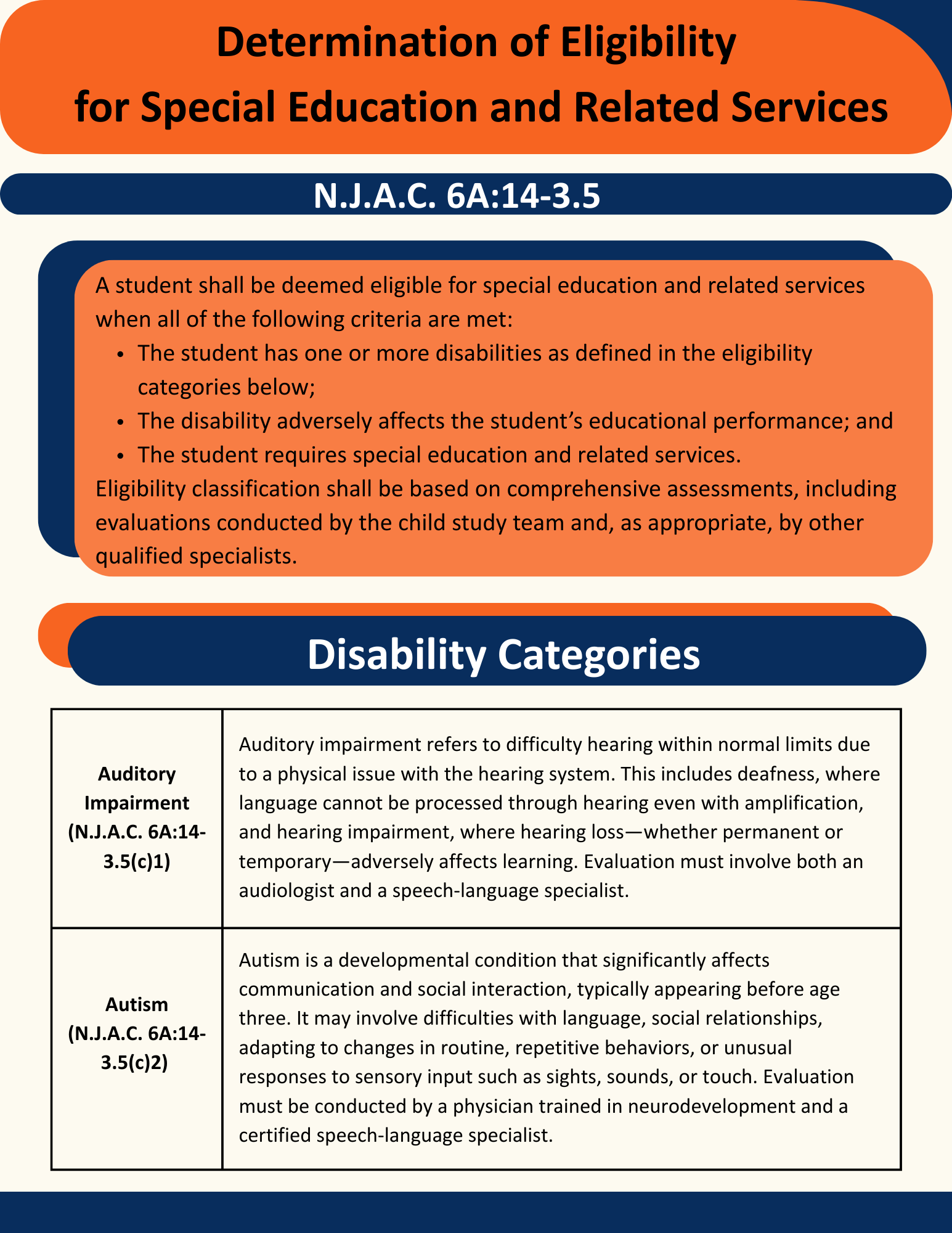
Click here for access to a printable guide of the Components of an Individualized Education Program (IEP).
Click here to return to the Parent and Family Engagement Website.
Translation Availability
-
This website was created to promote access and opportunities for families who do not speak English as their primary language.
To translate this website, please follow the steps below:
- Scroll to the top-right corner of the website.

2. Click the white “Translate” button with black text at the top of the screen.
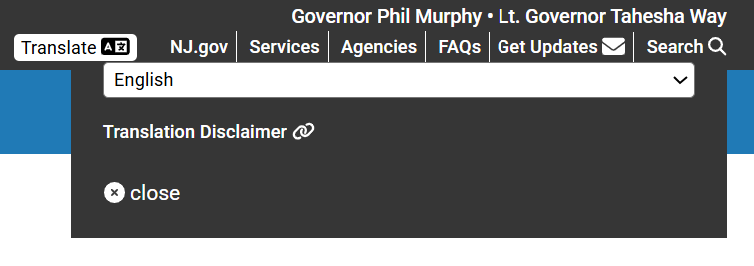
3. Select your preferred language from the drop-down menu. Please review the disclaimer provided below the language options regarding translated text.
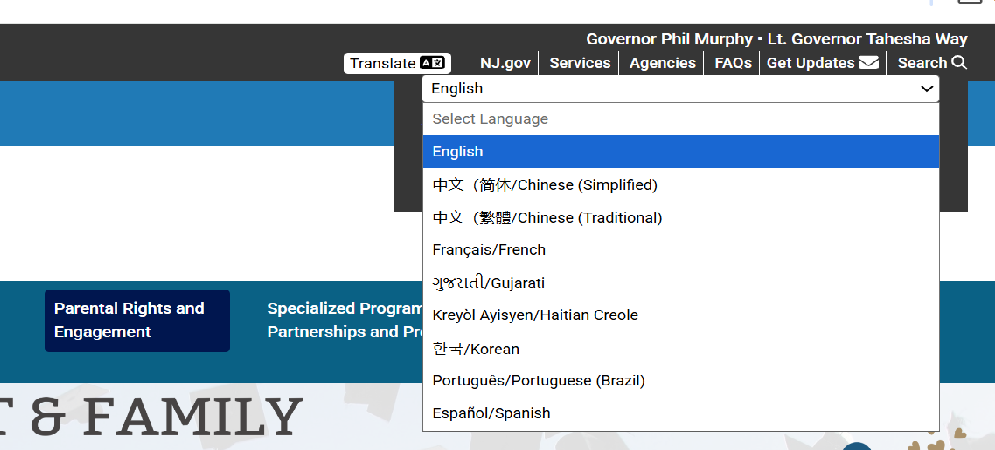
4. View the website content in your selected language.